Eco-Friendly Roofing Options: Materials, Benefits & ROI
Is your roof helping the environment, or hurting it? It might not be something you think about every day. But when the summer sun is baking your attic or winter storms are pounding your shingles, your roofing choices matter—for your wallet, your comfort, and the planet.
At Rozzo Roofing, we see the difference eco-friendly roofing makes for families and businesses. We handle everything from emergency roofing to gutter repair near you, but we also love helping clients choose greener, smarter options that pay off for years.
Why Eco-Friendly Roofing Matters 🌎
A roof is more than just shingles and nails. It’s your shield against weather, your temperature control, and—if you pick the right material—a way to keep energy bills down while shrinking your carbon footprint.
Think of your roof like a hat for your building. The wrong one leaves you sweating or shivering, wasting energy with every gust of wind or ray of sun. The right one? It keeps you comfortable and can even lower your monthly bills.
How Traditional Roofs Fall Short
Asphalt shingles are everywhere. They’re cheap up front, but they heat up fast, break down in landfills, and need replacing sooner than many alternatives.
Quick fact: The EPA estimates that 11 million tons of asphalt shingle waste hit US landfills each year.
Safety & Inspection Checklist for Green Upgrades
Before you start swapping out your roof for something greener, safety comes first. Here’s a quick checklist:
- Inspect the attic: Look for leaks, mold, or poor insulation.
- Check for structural issues: Rot, sagging sheathing, or damaged decking need fixing before any new installation.
- Review local codes: Some eco-roof materials require approval under your municipal building codes (reference: International Building Code).
- Ask about fire ratings: Especially for green/living roofs or wood alternatives.
- Plan for access: Safe ladders, harnesses, and scaffolding are essential for any roof work.
- Check gutter and downspout health: Eco-roofs are only as good as their drainage.
DIY vs. Calling a Pro
Some folks feel handy with a hammer and a YouTube tutorial. But eco-friendly roofs aren’t like slapping on a new coat of paint.
DIY might be okay:
- Small repairs to gutters or downspouts.
- Cleaning debris or checking flashing.
But call a pro for:
- Full material replacement (metal, tile, living roof).
- Upgrades involving insulation and ventilation.
- Emergency roofing after storms or leaks.
- Skylight and chimney flashing upgrades.
Why? Because eco-materials often need special fasteners, underlayments, or structural reinforcement. A pro brings experience, certifications, and safety know-how.
What Rozzo Roofing Pros Do on Arrival
When our team arrives, we don’t just climb up and start swinging hammers. Here’s our step-by-step:
- Thorough inspection: We look for hidden leaks, rot, and weak spots.
- Material recommendations: Based on your building, climate, and energy needs.
- Safety setup: Harnesses, fall protection, and site prep.
- Drainage check: Gutters, downspouts, and flashing are all part of the system.
- Eco-material sourcing: Only certified, tested products (look for ENERGY STAR, UL Environment, or Cradle to Cradle certifications).
- Communication: We keep you in the loop, every step.
Comparing Eco-Friendly Roofing Materials
Let’s break down the options. Each has its own strengths, quirks, and payback timeline.
Metal Roofing
Think of metal roofs as the marathon runners of the roofing world. They last 40–70 years, reflect heat like a mirror, and are often made from recycled content.
Benefits:
- Lowers cooling costs by up to 25%
- Fire-resistant, lightweight, and recyclable
- Works for both residential and commercial
Drawbacks:
- Higher upfront cost than shingles
- May require soundproofing for rain
ROI: Pays off in energy savings and longevity. Less landfill waste.
Cool Roofs
“Cool” doesn’t just mean stylish. Cool roofs use special coatings or materials that reflect sunlight and shed heat.
Types:
- Light-colored shingles or tiles
- Membranes for flat roofs
- Coatings for existing roofs
Benefits:
- Keeps attic temps 20–60°F cooler
- Reduces AC use, shrinking energy bills
- Fights urban heat island effect
ROI: Quick payback, especially in hot climates. Some coatings can be added to old roofs.
Recycled Shingles
These shingles take what would be trash—like rubber, plastic, or wood—and give it new life on your roof.
Benefits:
- Diverts waste from landfills
- Durable and often impact-resistant
- Mimics the look of slate or wood
Drawbacks:
- May cost more than asphalt
- Quality varies—stick to certified brands
ROI: Good for the planet, solid for your wallet over time.
Living/Green Roofs
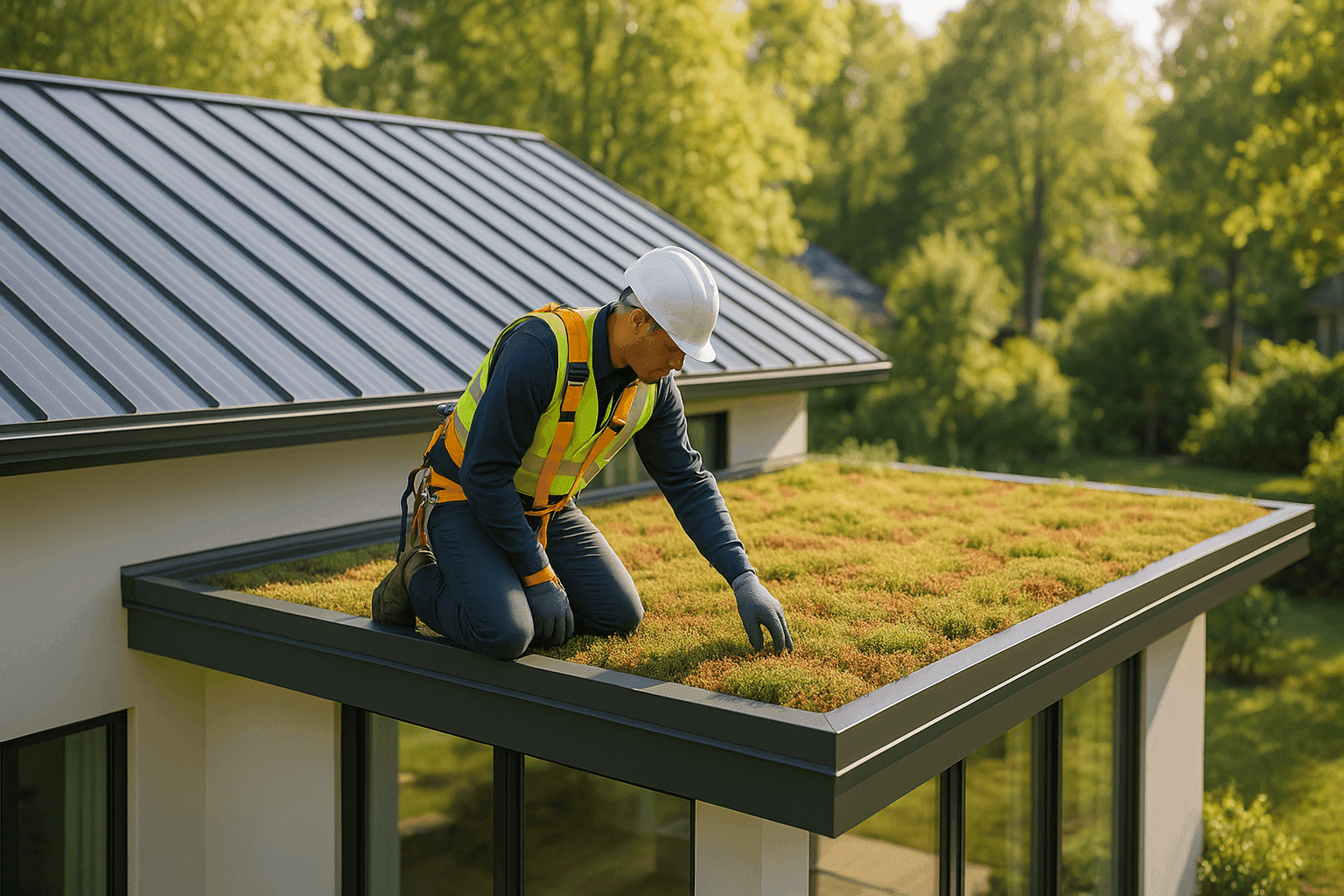
Picture a rooftop garden. That’s a living roof—plants, soil, drainage layers, all working together.
Benefits:
- Absorbs rainwater, reducing runoff
- Insulates for year-round comfort
- Creates habitat for birds and pollinators
Drawbacks:
- Needs structural support and expert installation
- Requires ongoing maintenance
ROI: High in urban areas, with stormwater, aesthetic, and insulation perks.
Energy Savings, Heat Reflection & Environmental Impact
All these materials have one thing in common: they keep your building cooler in summer, warmer in winter, and cut down on wasted energy.
The U.S. Department of Energy cites up to 30% savings on energy costs with the right roofing choice. That’s money back in your pocket, every month.
- Metal roofs: Reflect up to 70% of solar heat.
- Cool roofs: Can lower roof surface temps by 50°F or more.
- Living roofs: Reduce urban air temps and filter pollution.
Less energy means fewer emissions. That’s good for your wallet and for the world.
Incentives, Tax Credits & Rebates
Eco-friendly roofing isn’t just about feeling good. It can mean real savings, too.
- Federal tax credits: The IRS offers credits for energy-efficient home improvements, including some roof types. Check IRS Form 5695 for details.
- State/local rebates: Many utility companies and state governments offer rebates for ENERGY STAR or cool roofing installations. Find incentives in your area at the Database of State Incentives for Renewables & Efficiency (DSIRE).
- Insurance discounts: Some insurers offer lower premiums for fire-resistant or impact-rated materials.
Always check with a tax professional before claiming credits.
Long-Term ROI: What to Expect
Eco-roofs often cost more upfront. But think of it like buying a fuel-efficient car. The savings add up, year after year.
- Metal and tile roofs can last twice as long as asphalt.
- Lower HVAC bills.
- Fewer repairs and less landfill waste.
- Potentially higher resale value.
For commercial properties, a green or cool roof can also boost LEED or other building certifications.
Prevention & Maintenance: Tips for Longevity
- Clean gutters and downspouts regularly: Prevent water backup and ice dams.
- Schedule annual inspections: Catch small issues before they grow.
- Trim trees: Overhanging branches can drop debris or damage roofs.
- Check and reseal flashing: Stops leaks around vents, chimneys, and skylights.
- Maintain roof coatings: Reapply every few years for best performance.
A well-maintained eco-roof is a long-lasting one.
Costs & Time Factors
- Metal roofing: $8–14 per square foot, lasts 40–70 years.
- Cool roof coatings: $0.75–2 per square foot, reapply every 10–15 years.
- Recycled shingles: $7–12 per square foot, lifespan varies.
- Living roofs: $10–25 per square foot, plus maintenance.
Most residential roofs take 2–7 days to replace, weather permitting. Commercial or green roofs may take longer.
When It’s an Emergency 🚨
Storms don’t care if your roof is eco-friendly. When leaks, hail, or wind strike, Rozzo Roofing’s emergency roofing team is ready.
- Tarping and temporary repairs: Fast protection from further damage.
- Assessment of underlying issues: We check insulation, decking, gutters, and flashing.
- Help with insurance claims: We document damage for your records.
After the storm, we can help you rebuild—greener and stronger.
FAQ
Are eco-friendly roofs only for new construction?
No! Many materials—like metal or cool roof coatings—can upgrade existing roofs. Living roofs and recycled shingles may need more extensive prep.
Will a green roof grow weeds or leak?
Not if it’s installed and maintained properly. Layers of root barriers, drainage, and waterproofing keep things safe and tidy.
How do I know if my roof is eligible for incentives?
Check the ENERGY STAR and Department of Energy websites for product lists. Confirm with your state or local rebate programs.
What about gutter repair near you for eco-roofs?
Good gutters are essential for any roof, but especially for green/living roofs or heavy rain areas. We recommend regular cleaning and professional inspections.
Local & Seasonal Considerations
Every climate brings its own roofing challenges.
- Heavy snow: Metal and tile roofs shed snow well. Living roofs need extra support.
- Intense sun: Cool roofs and light colors perform best.
- Heavy rain: Prioritize drainage, flashing, and gutter repairs.
- Wind/hail: Impact-rated materials offer better protection.
Check your local building codes and weather data. The National Roofing Contractors Association and local authorities can offer guidance.
Green Certifications & Customer Voices
Rozzo Roofing uses materials certified by ENERGY STAR, UL Environment, and Cradle to Cradle for safer, smarter roofing.
“Our metal roof from Rozzo Roofing cut our summer cooling bill by nearly 30%. The installation was smooth, and we love knowing our roof is built to last.” — Janet & Mike, homeowners
“After a storm, Rozzo Roofing helped us rebuild with recycled shingles. It’s tough, looks great, and we got a rebate from our utility.” — Carlos, business owner
Ready to go green and put your roof to work for you?
Call Rozzo Roofing now — or reach us anytime at 888-598-3440 .